
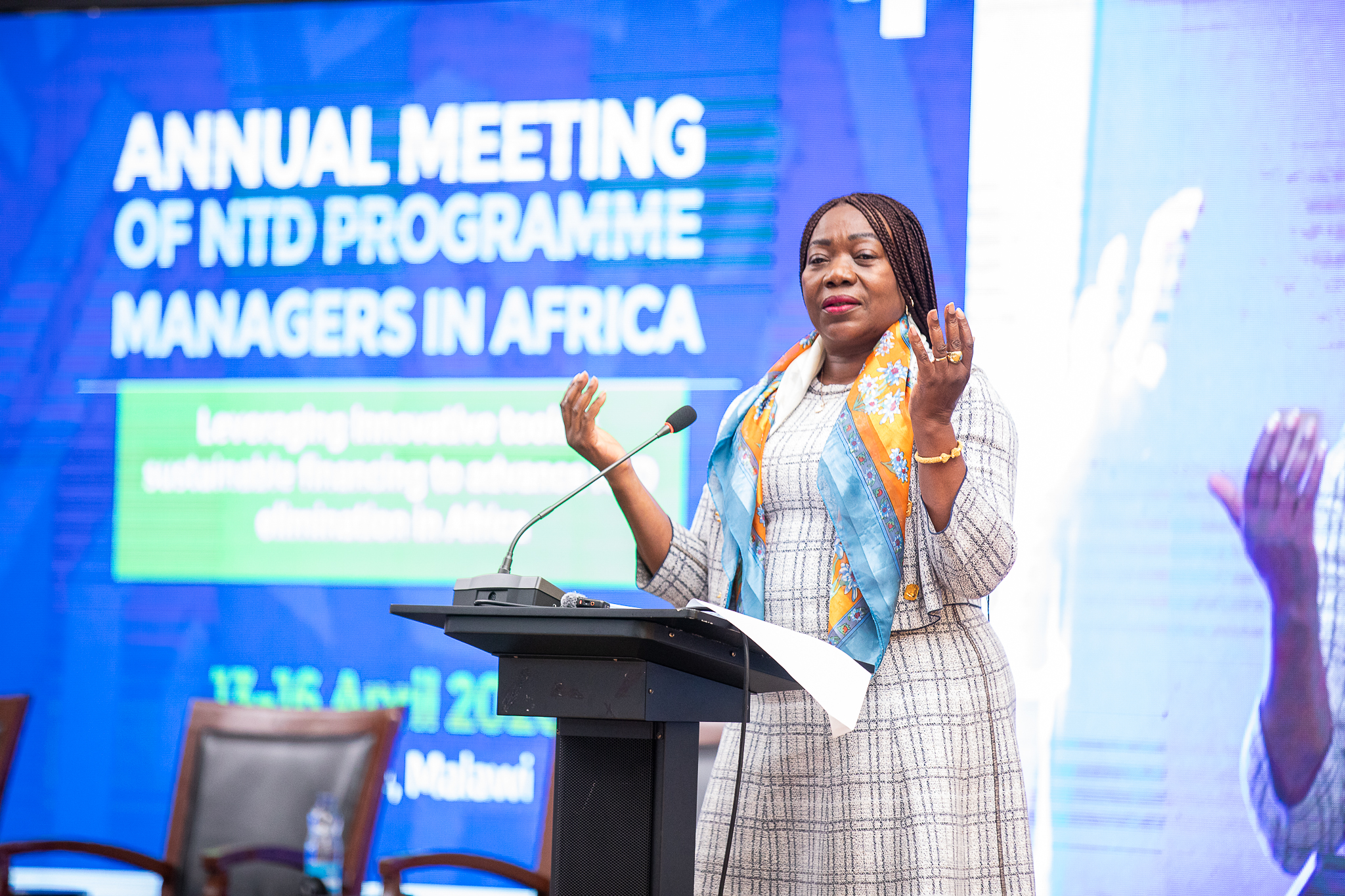
The African Union Commission (AUC) in close collaboration with World Health Organization (WHO) organized a four-day annual meeting from 13th to 16th April 2026 at the Bingu International Convention Centre in Lilongwe, Malawi.
The 2026 Annual Meeting of National Neglected Tropical Diseases (NTD) Programme managers was officially opened by the Minister of Health and Sanitation, Hon. Madalitso Baloyi MP. The Meeting brought together programme managers from various member states, policymakers, partners, and experts from across Africa to have strategic discussions, technical cooperation, and new commitment to continental elimination of NTDs by 2030.
This year meeting was held under the theme: “Leveraging innovative tools and sustainable financing to progress NTD elimination in Africa” and it was a high-level platform to review progress, systemic challenges, and establish actionable pathways to end Neglected Tropical Diseases across the continent.
In her remarks Hon. Madalitso Baloyi restated the firm dedication of Malawi to eradicating NTDs, and emphasized the impressive progress made by the country, such as the eradication of trachoma in 2022, lymphatic filariasis in 2020, and leprosy in 1994 as a health issue.
She emphasized that the success of Malawi is a result of co-ordinated action, long-term investment and empowered health systems. Furthermore, highlighting that development will be conditional upon increasing the access to the necessary drugs, increasing the prevention, and keeping the ownership of nations high. She also declared that this gathering is a pivotal space of collective learning, actionable solutions, and new commitment to eradicate the negligence of NTDs and leave no one behind.
Discussions aimed at enhancing primary health care systems, promoting sustainable financing, scaling innovation, and equitable provision of prevention, treatment, and care services. Accountability, partnerships and community engagement were also highlighted by the stakeholders as key success drivers.
Respondents discussed current issues, such as a decrease in funds, incompleteness of water and sanitation systems, and the lack of even development across the regions. There was a high focus on incorporating NTDs services into primary health care, as well as domestic investment.
The World Health Organization Country Representative, Dr. Charles Kuria Njuguna in his speech emphasized the immense progress that has been achieved and the ongoing challenges related to the need to eliminate NTDs. He further identified decreasing funding, water, sanitation, and hygiene (WASH) gaps, and stagnant development in certain areas as major obstacles. Dr. Njuguna demanded greater mobilization of domestic resources, greater incorporation of NTD interventions into primary health care systems and embracing novel and evidence-based strategies to hasten impact.
He reiterated that it is only achievable with collaboration to take concerted action to eradicate neglected tropical diseases and to achieve equity, resilience, and universal health coverage.
During the closing session of the meeting, the African Union Southern Africa Regional Resident Representative, H.E. Ambassador Hilda Suka Mafudze in her remarks praised the dedication, technical rigor and spirit of collaboration of the Member States and partners during the meeting.
She emphasized that although NTDs continue to be a severe societal health concern impacting more than one billion individuals worldwide, they are solvable by persistent will and innovation, and long-term investment.
Based on the vision of the African Union Agenda 2063, she highlighted that the combat against NTDs is not just technical, but transformational-central to the overall welfare of millions of people on the continent.
As the number of NTDs still afflicting over one billion individuals across the world (many in Africa) the meeting ended with a powerful and cohesive effort to strengthen the efforts, rally resources, and maintain the momentum of meeting the targets of eliminating the disease in the continent by 2030.This meeting is a step in a new direction of dialogue to action and the promotion of a common vision of a healthier and more resilient Africa.